

When precise cross line indication is processing in special fields of 2D machine vision calibration, not limited by work distance and other harsh working environments, it would always make a good job to apply a long wavelength made device of a TTL modulation 980nm infrared cross line laser module. It gets special adoption of TTL high speed modulation power source, which allows for TTL level pulse control for laser activation, linking with the camera’s exposure signal to illuminate the laser only during the instant of image capture. This effectively reduces module heat generation and ambient stray light interference, prevents image overexposure caused by continuous illumination, and suits high-speed vision inspection workflows.
Employed by an import 980nm infrared laser diode within 5mW to 500mW, cooperated with a metal heat sink cooling system inside a durable anodized aluminum alloy housing tube, this TTL modulation 980nm infrared cross line laser module always gets superior nice heat dissipation and wide range operating temperature fluctuation, unaffected by any harsh occasion of mechanical shaking and calibration as well. The infrared cross lines are invisible to the human eye, leaving no marks on the workpiece and avoiding interference with cosmetic inspections. When paired with a 980nm narrow-band filter, TTL modulation infrared cross laser blocks visible ambient light, ensuring the infrared crosshair profile remains clear and stable even in high-intensity lighting conditions.
In process of long operating time lasted cross line projection, TTL modulation 980nm infrared cross line laser module applies a qualified glass coated lens with 10, 15 and 110 degree fan angles, adjustable focus optic lens. It generates vertical and horizontal reference lines with the intersection serving as the coordinate origin, enabling reference positioning in both X and Y directions in a single capture. Compared to dot lasers, this eliminates the need for multiple sampling operations, significantly boosting the efficiency of 2D coordinate system calibration. This TTL modulation 980nm infrared cross laser generates highly straight, sharp edge and crisp infrared cross lines with different dimensions. Excellent coordinate repeatability ensures the stability of visual calibration. The non-contact calibration method prevents scratches on lenses, tooling, or the work pieces being measured.
Configured with a ultra compact size tube design, TTL modulation cross line laser module can be easily integrated into vision camera mounts, inspection fixtures, and robotic vision units. It is featured by stable drive performance and minimal thermal drift, the module adapts to harsh industrial environment, such as temperature fluctuations and dust, and supports continuous, long-term calibration operations. When 980nm infrared alignment laser is operating with high attention to powerful IR laser radiation and reflection, and wearing correct laser safety goggles, it enables high security and high precision IR cross line measurement for multiple fields, including 2D vision calibration involving highly reflective workpieces, cosmetic components, and operations in high-ambient-light workshop environments.
Category: TTL modulation cross line laser module
Easy Operating TTL Modulation 650nm Red Cross Line Laser Module in Textile Cutting
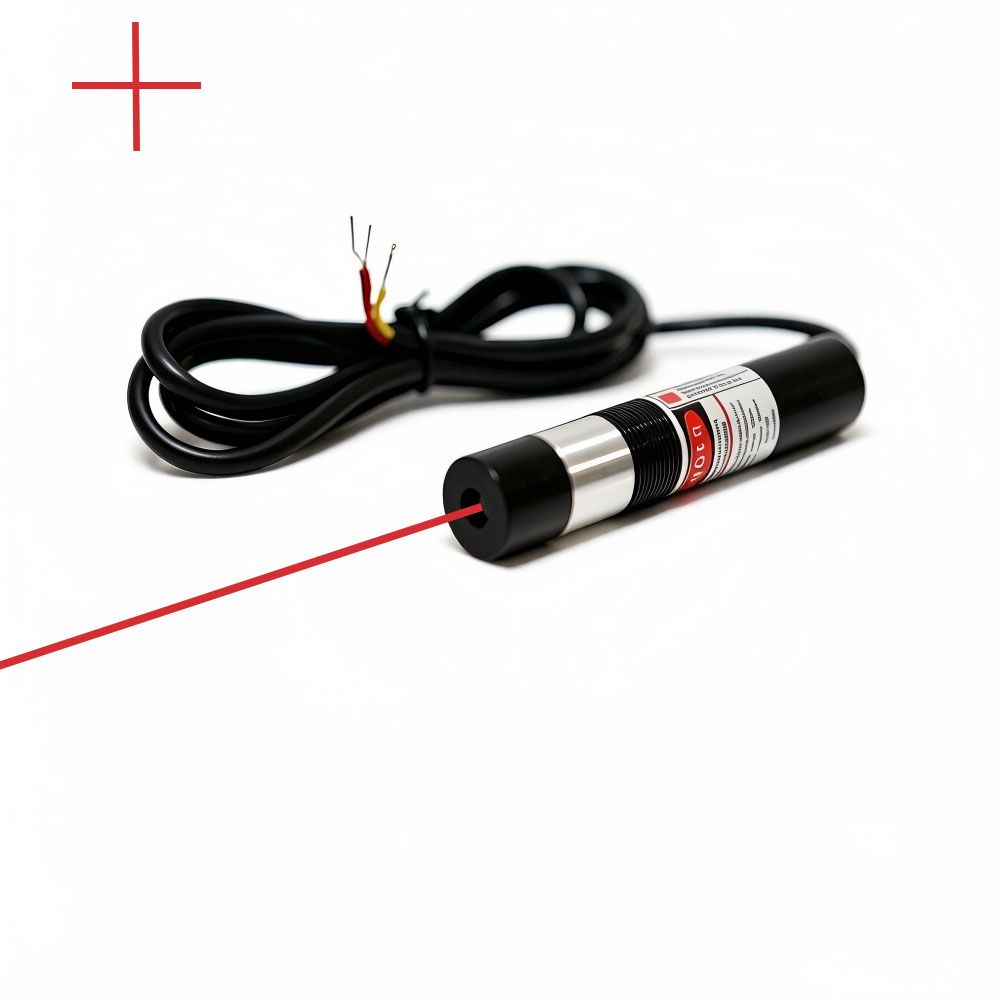
On consideration of high level of accuracy and high brightness cross line projection onto various textile and apparel surfaces, in order to assure highly clear and precise cross line alignment for all textile cutting works, it would be an efficient job for workers to apply a high energy density light emitted tool of a TTL modulation 650nm red cross line laser module. It gets the special power source in type of TTL high speed modulation. Equipped with an import 650nm red laser diode and a qualified optic lens with different fan angles inside a high duration metal housing tube, after its easy installation or integration into any textile cutting beds, this TTL modulated red cross laser enables good direction, high precision and high stability two perpendicular red lines generation onto multiple working surfaces constantly and conveniently.
The usual adoption of a TTL modulation 650nm red cross line laser module applies an import 650nm red laser diode within 5mW to 100mW as its beam emitting source. In order to make perfect control of power source, it adopts TTL linkage and controllability. It can be integrated with the cutting bed PLC control system. The laser illuminates during cutting positioning and shuts off during the cutting process, reducing module heat generation and avoiding prolonged laser exposure to the fabric. When TTL modulated red cross laser gets basic use of a metal heat sink cooling system inside a durable anodized aluminum alloy housing tube, after leaving sufficient space for tube heat dissipation, it achieves superior nice heat dissipation and increasing stability red light and two perpendicular red lines generations as long as 24 hours per day.
When TTL modulation 650nm red cross line laser module applies a qualified glass coated lens with 10, 15 and 110 degree fan angles, cooperated with adjustable focus optic lens, it projects horizontal and vertical cross lines, provides both horizontal and vertical references. The intersection point directly locks the cutting origin, completing two-way alignment in one step. Even multi-layered fabrics can be quickly aligned, shortening fabric placement and adjustment time. TTL modulation 650nm red cross laser gets high recognition of 650nm red light, after projection of highly straight and fine red cross lines within 0.5 meter to 6 meters lengths, it performs well with clear imaging on various fabric surfaces. Markings remain visible even under normal workshop lighting conditions. Suitable for cotton, synthetic fibers, leather, and other fabrics.
In various textile garment processing works, TTL modulation cross line laser module keeps work with noncontact cross line positioning, with no fabric damage. Laser projection marking eliminates the need for contact with the fabric, preventing scratches and snagging on thin fabrics. Owing to its ultra compact size and durable structure design, not limited by any working environments, 650nm red alignment laser always makes sure of easy installation on both new new and existing cutting machines without significant modifications to the original mechanical structure, resulting in low downsizing. It brings users excellent cross line indication for multiple garment processing fields, including CNC cutting beds, manual cutting beds, and other equipment, reducing manual chalk marking and improving alignment consistency in large-volume fabric cutting.
TTL Modulation 635nm Red Cross Line Laser Module in Scientific Optical Experiments
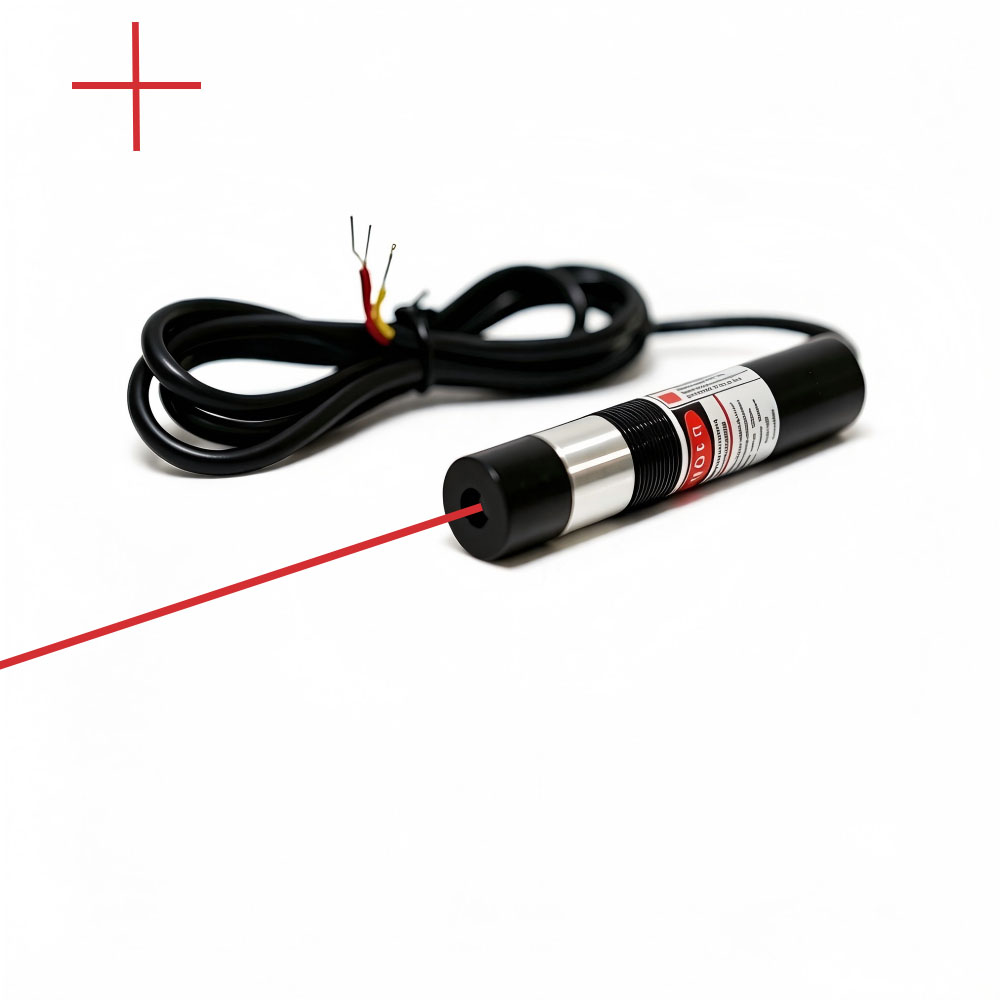
Unlike the use of any prior cross line drawing or printing work, not limited by work distance, height and other complex working environments etc, it always makes a good job for engineers and medical workers to apply a highly intense light emitted tool of a TTL modulation 635nm red cross line laser module. In practical scientific optical experiments fields, powerful TTL modulation supports highs peed switching and pulse triggering, allowing for timing synchronization with image acquisition equipment and displacement platforms to meet experimental timing control requirements. Intermittent operation reduces module temperature rise and provides more stable output.
The usual use of a TTL modulation 635nm red cross line laser module applies an import 635nm red laser diode within 5mW to 100mW output power. It is always required to make long operating time lasted red light emission. For the most important of all, owing to the special use of a metal heat sink cooling system inside a 16mm or 26mm diameter anodized aluminum alloy housing tube, this TTL modulated red cross laser always gets superior nice heat dissipation and increasing stability red vertical and horizontal lines generation in continuous use. It maintains high level of laser beam stability under multiple working occasions, including wide range operating temperature, mechanical moving or shocking, dust or moisture as well.
Basically TTL modulation 635nm red cross line laser module applies a qualified glass coated lens with 10, 15 and 110 degree fan angles, generating high linear quality and highly straight red cross line lengths within 0.5 meter to 6 meters in distance. The red cross line intersection provides both lateral and longitudinal references, enabling rapid determination of device offset and rotation angles. When it gets less than 1mard laser beam divergence and special TEM00 laser beam mode, either pointing at close or long distance, TTL modulated 635nm red cross laser gets only 0.3mm fineness at 10cm, 1mm to 2mm fineness at 2 meters work distances. Compared to point light sources, it offers higher efficiency in optical path calibration.
Featured by ultra compact size and high duration metal housing tube design, with the assistance of a laser alignment mounting bracket, TTL modulation cross line laser module enables quite easy installation and quick reaching of red vertical and horizontal lines generation onto multiple working surfaces. It enables minimal drift at intersection points, and good reference repeatability reduce systematic errors caused by manual calibration. This 635nm red alignment laser allows for easy mounting onto optical supports and displacement stages, suitable for both formal scientific experiments and teaching optical demonstrations. It provides excellent cross line alignment source for multiple fields, including optical path setup and calibration, optical component assembly and adjustment, experimental platform origin calibration, target surface reference positioning, and mechanical displacement platform alignment.